

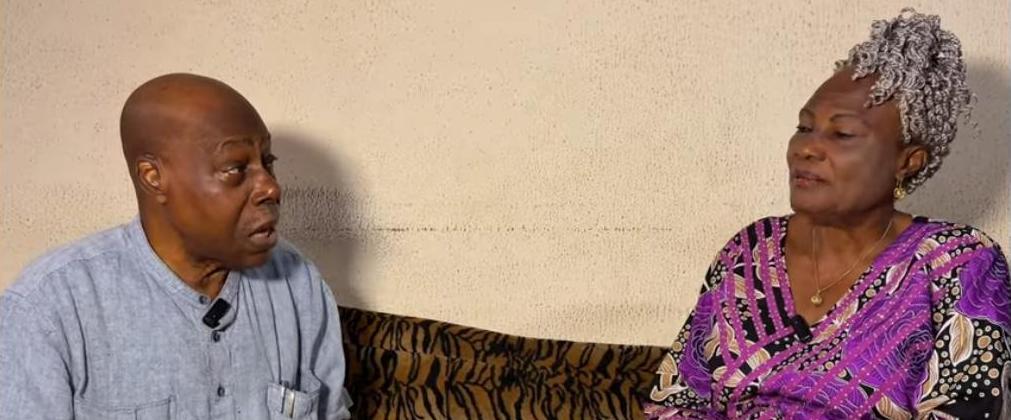
Interviewer: Dupe Ajayi-Gbadebo
Guest: Mr Ray Ekpu (Co-founder of the celebrated Newswatch Magazine)
Dupe Ajayi: I am Dupe Ajayi-Gbadebo. We are back on the Dupe Ajayi Show, looking at reflections on the media – the past, the present and the future. Today I have the honour of talking to a big boss of mine whom I call “Oga”. I’m talking about a person that the whole nation knows as a veteran journalist, a prolific writer, an informed commentator, a co-founder of “Newswatch” magazine and its first Editor-in-Chief, and so much more. He is part of everything that is journalism. It started years and years ago. I’m talking about the person of Mr Ray Ekpu. I’m glad to have you, sir.
Ray Ekpu: I’m honoured, Dupe, to be interviewed by a seasoned professional like you. I’m honoured. Thank you.
Dupe Ajayi: Thank you so much, sir. This interview is looking at the media generally. You started over half a century ago. How did you get into journalism, sir?
Ray Ekpu: Thank you very much. I didn’t know I would get into journalism. I was a young boy going to primary school, three kilometres away from my village, and my father used to subscribe to a newspaper called “The Nigerian Outlook”. It was published by the Eastern Regional Government. He would go to the Customary Court of Appeal – an intermediate court between the Customary Court and the Magistrate Court that existed in those days in the Eastern Region. He would come back late, but I would get back from school early. I would collect the newspaper from the vendor and read it. I enjoyed reading Nnamdi Azikiwe’s speeches. There was also a man called M.C.K. AJuluchukwu who wrote a column every week in that newspaper. I remember what he wrote once about Chief Fani-Kayode, a prominent politician in the South-West. He used to be called “Fani the Power”, and then he did something which made M.C.K. AJuluchukwu write, “Oh, Fani the Power has now become Fani the Powder.” That was when I started having this thrill about words that sparkle. That’s how it began.
I didn’t know I would become a journalist then. When I went into secondary school, I would report sporting events and post them on the board, signing as “Pressman Remy” – from Raymond, my name. Then, in higher school at Holy Family College, a Catholic secondary school, I established the first magazine/newspaper, which I called “The Nightingale”. I called myself Editor-in-Chief. The principal took note of it and assigned one of the Reverend Fathers – an Irish priest who taught us English – to supervise what I was doing. I think that is what led me towards deciding to be a journalist.
I finished high school and was teaching when I applied to three universities – there was no JAMB then. I applied to the University of Ibadan and Ahmadu Bello University for English, and to the University of Lagos for Mass Communication. I was admitted to all three. I had a problem of choice. I spoke to a lecturer in the school where I was teaching – a graduate of English. He said to me, “I’m a graduate of English, but I’m not paid like a teacher because I didn’t do Education. I just got a degree in English. So, it is better for you to go and do journalism straight instead of doing English and then eventually wanting to become a journalist. Take the University of Lagos.” That was great advice. So, I ignored the other two and went to study Mass Communication at the University of Lagos.
In those days there used to be vacation jobs. I did my first vacation job with radio. A lot of people flattered me by saying I had a good broadcast voice, and I fell for it. When I returned to the university, we used to go for practical training at NBC Ikoyi. I met a graduate who was training me. He said, “Mr Ray Ekpu, you have a good broadcast voice and it seems you’re interested in broadcasting.” I said yes. He said, “Well, you may have a problem. I am a graduate and some of the people holding high positions here never went to university. They rose through the ranks and they discriminate against those of us who went to university.” At that time only state and federal governments owned electronic media – radio and television. So, he advised me to broaden my interest. That was valuable advice. In my second year I broadened my interest and shifted also to print media.
For my second vacation I decided to go to the print media – “The Nigerian Chronicle”, owned by the Cross River State Newspaper Corporation. It was there that I met Mr Moses Ekpo, a prominent journalist at the time. He schooled me and actually assigned me to interview all the commissioners in the state. It was a weekly newspaper. I interviewed every one of them and kept publishing the interviews. When I was to interview the Commissioner for Commerce, Dr Joseph Wayas – who later became Senate President – Moses Ekpo said to me, “This man is a stickler for time. You must get there at least 30 minutes before the appointed time.” That was another valuable piece of advice. I got there 30 minutes early. The man was ready. He came out, saw me and said, “Okay, good. Come in.” We did the interview.
All of this was while I was still in university – not even graduated. It was during that second vacation that I learned how to plan a page, how to design a newspaper and how to do editing. I moved around on my own to meet people in charge of these things because I wanted to learn. In those days, the universities gave only the theoretical aspects of the profession.
Dupe Ajayi: It’s still the case in many universities even now.
Ray Ekpu: Yes, and you are talking of close to 50 years ago. In fact, in 1982 I was Editor of “Sunday Times”. By then I had already edited one daily newspaper for three years – the Nigerian Chronicle – and the “Sunday Chronicle” for four months. I had practical editing experience. But I said let me go and get something more. I went back to the University of Lagos for a master’s programme in Mass Communication. At the end of the nine-month programme they gave us a questionnaire to assess it. Professor Ralph Akinfeleye was in charge. At the end he asked if anybody wanted to say something in addition to what he had written. I did. I said I had enjoyed my time there and learned a lot theoretically, but if I had not been in practice, even with my master’s degree I would not walk into a newsroom and do the job without supervision. I made two recommendations: one, send some of your lecturers to the newsroom for practical experience – go out and cover stories; two, invite educated practitioners who have master’s degrees or PhDs to come and impart their knowledge on a part-time basis. They said “good, good,” but of course they did not implement it.
Dupe Ajayi: You’ve been in journalism for over 50 years – 53 years. Who were your contemporaries? Who were the big names at that time?
Ray Ekpu: Bisi Adu was one; is now a professor in Canada. I still exchange information with him. Clement. We were in the School of Journalism together. We heard of names like N.S. Koko, who was said to be a very powerful editorialist. Jack, who is late now. Some journalists who fought for independence became politicians; some politicians joined journalism. Journalism was a big instrument for fighting the colonialists. Mostly journalists and lawyers at the beginning.
Dupe Ajayi: How long were you at the “Chronicle”?
Ray Ekpu: Six years. Then I moved to “Daily Times” in Lagos. I was Editor of the “National Chronicle” for three years and heard they wanted to promote me to Editor-in-Chief. I was just about 33 years old. I said they wanted to promote me into obscurity. I knew there was some politics around it. Some big decision-makers thought my journalism was too vigorous. There was the issue of creation of states at the time. I was pushing for it. Other people had states and got a lot of federal revenue. Why were they opposed here? They had a lot of property in Calabar and didn’t want states created so their properties would be confiscated, as happened in Rivers State. They didn’t like me for pushing it. So, they wanted to promote me upstairs. I moved to “Daily Times”.
I was on assignment from Calabar to Lagos when my secretary called and said the Managing Director wanted to speak to me. I went to see him in his Kakawa Street office. He spread some newspapers on the table and we discussed them. At the end he said, “You are a brilliant journalist. I would like you to come and edit “Sunday Times” for us.” I asked for two days to get back to him. I went back to Calabar, told my wife, and we decided to move to Lagos because it was a bigger field. Peter Osugo, the General Manager, wrote offering me the job. The salary was lower than what I was earning as Editor of the Nigerian Chronicle, but I accepted. My wife agreed. That’s how I came to “Sunday Times”. The rest, as they say, is history.
Dupe Ajayi: By the time you got to “Sunday Times”, Chief Babatunde Jose had left. Do you recall what happened to him?
Ray Ekpu: I wasn’t there. I think he decided to leave after the Federal Government took over 60% of the shares of “Daily Times”. They removed him.
Dupe Ajayi: How long were you at “Daily Times”?
Ray Ekpu: I got there and discovered there were lingering problems with the previous editor of “Sunday Times”; he had taken them to court. Publications appeared calling me a hatchet man brought by the NPN. The Managing Director called me and said all that would blow away, but the first issue I published must carry my qualifications so people would know who I was. I published my degree from the University of Lagos – Second Class Upper – and my Advanced Diploma in Advanced Journalism from Indiana University. I wrote to a number of good writers inviting them to write for “Sunday Times”. Some thought I was a hatchet man, but after a few weeks they started coming to me saying they were happy with what I was doing. I spent two years there. I did my column. I knew it was a problem for some NPN people. One day a director came and after he left, my deputy said some directors were saying I was arrogant because I didn’t go to greet them. I said I was not their mate; they were board members. I got three letters of commendation from the Managing Director and General Manager within two years. At the end of Two Years I was removed and posted to “Business Times”. It was surprising because editors were assessed by sales and circulation, and I was doing well. “Business Times” was subordinate to “Sunday Times”. I knew it was a demotion but I didn’t feel bad. I said I would prove them wrong. I went out, bought business magazines and books, and freshened my knowledge. My staff in “Sunday Times” were crying; they wanted to follow me. I told them no, stay and support the new editor, Andy Borha.
I accepted the move. I introduced photographs, graphs and other subjects so that a businessman could buy one paper and get everything. After three weeks the Managing Director called me and said I had changed the format; I should return it to what it was. I sat down that same day and wrote my resignation letter. I was supposed to give three months’ notice but I said calculate my entitlements, take three months’ salary and pay me the rest. I took the letter to the General Manager. He said “Don’t go, we will resolve it”. I left the letter and went home. That’s how I left “Daily Times”.
The next day I went to “The Guardian”. I saw Lade Bonuola, the Managing Director, and said I needed a reporter’s job. He was surprised. I gave him two reasons: I had contacts and could bring stories every day; and senior staff would fight me thinking I was coming for an editor’s job. He said come tomorrow. That night Dele Giwa came to my house and said no, you are not going to “The Guardian”. We have met with Chief M.K.O. Abiola and he has created the position of Chairman of the Editorial Board for you. You are coming to “Concord”. I initially refused because if anything happened to one of us it would affect both, but Dele insisted nothing would happen that we could not handle. So, I accepted.
Dupe Ajayi: So, you went to “Concord” as Chairman of the Editorial Board?
Ray Ekpu: Yes. I was there for one year and seven months. I worked with Yakubu Mohammed (Editor, daily), Dele Giwa (Editor, “Sunday Concord”) and the Editor-in-Chief. I had five young brilliant journalists working with me. We held editorial meetings every day, wrote editorials and opinion articles for the three newspapers.
The only problem I had was one editorial we wrote on federalism. The Ooni of Ife had given a lecture recommending confederation. We opposed it; we believed in federation. I submitted it to the Editor-in-Chief. Yakubu Mohammed said no, this cannot go because Chief Abiola believes in confederation. I withdrew it and wrote another one. That was the only editorial problem.
The second issue was a letter to the editor I approved. The writer complained that M.K.O. Abiola was a Muslim, so why should his newspapers advertise alcohol? I published it. Chief Abiola was angry. He called Yakubu and Dele. They came to talk to me. I said news is a free market place of ideas. It doesn’t change our policy. They suggested I go and see the Chief. I said if he wants to talk to me he will call me. He never did. No punishment.
Then there was the issue with Dele Giwa. He had a four-page pull-out in every Sunday Concord. He assigned a lady, May Ellen Ezekiel (now late), to do human-interest stories. One week she did a survey of the 100 best-dressed men in Nigeria and named me and Chief Abiola. I told her to remove my name; I was not interested. She removed mine but put Dele Giwa ahead of the publisher. Chief Abiola went mad and told Dele to resign. I advised Dele not to resign; let him sack you if he wants. For four days he kept calling for the resignation. Dele refused. Then Abiola removed him as editor and sent him to the Editorial Board, of which I was Chairman. I brought a desk and chair into my big office and said we would share the office and secretary. Within one hour Abiola arrived, saw the desk and left without saying anything.
Then people started writing petitions against the three of us – Yakubu, Dele and myself – accusing us of spending company money. They set up a two-man committee; they found nothing against us. We did a big interview with Muhammadu Buhari in February 1984. The three of us did it, took a loan from the company, stayed in a hotel one night transcribing, and published a page story. They petitioned that we took money to enjoy ourselves. The Chief gave us queries. We responded. By this time he had started calling us “strangers” because the three of us were not Yoruba. We had taken “National Concord” from about 38,000 circulation to 442,000. “Sunday Concord” also rose. He was happy and called us money-makers. We even bought new springs for “Punch”when it was in trouble because he asked us to support “Punch”.
I had been writing speeches for him regularly – even using candlelight when there was no power. Once I asked for a discount on a generator; he gave me a personal cheque. Then this matter happened and he started calling us strangers. I said I don’t want to work in an organisation where people behave like this. I wrote a letter of resignation giving three months’ notice. Yakubu also resigned the same day. Dele was on honeymoon in Ivory Coast. We went to the airport to receive him and told him. He asked why we didn’t wait. The next day he also resigned.
I called a meeting of the Editorial Board and told them I had given notice but Chief Abiola would accept it with immediate effect. That same afternoon he called Yakubu and me for five minutes and said thank you, you can go. He asked us to leave immediately. I had already moved my things out.
Dupe Ajayi: How long were you out of a job before you started “Newswatch”?
Ray Ekpu: About six months. We left in July and the first issue of “Newswatch” came out in January 1985. We registered a company and gave ourselves 60% (15% each – Yakubu, Dele and myself). We sold the remaining 40% to businessmen but retained control. We agreed we would concentrate on journalism for at least 20 years; none of us would take a political appointment.
At that time the only news magazines were “African Concord” and “African Guardian”. We studied “Newsweek”, “Time magazine” and others. We admired Time Magazine more because it allowed writers to write in their own style and gave the magazine multi-flavour. We didn’t like “Newsweek” because it was too canned. We taught our writers “new journalism” – write non-fiction as if it is fiction: bring quotes, conversation, humour. By the time the reader gets to the end he should say, “Oh, why did it end so soon?”
The market received us very well. The first issue we printed 35,000 copies; it sold out in two days. Distributors asked for more. The following week we increased to 45,000. It kept rising. Dele was the first Editor-in-Chief for one year and ten months. After he was assassinated I took over as Editor-in-Chief for seven years. Then Yakubu took over for another seven years.
Dupe Ajayi: Did you run into problems with the military government?
Ray Ekpu: We had problems after Dele was assassinated.
Dupe Ajayi: How did Dele Giwa’s assassination hit you as a magazine, as a company and as his friends and colleagues?
Ray Ekpu: It was devastating. I could not explain it. Many people thought the magazine would not survive or even publish that week. He was assassinated on Sunday. We were supposed to have a meeting at 1 p.m. I had spoken to him that morning. I was coming back from Surulere when I saw his cook running in a blood-splattered nightgown shouting, “Dele has been bombed!” I drove back. The house was full of people crying. He had been taken to the hospital. A kind lady drove me there. I saw him; his eyes were wide open. He was dead. I started crying, then cleaned my tears and started calling the other directors and our lawyer, Gani Fawehinmi.
Two days earlier the DSS had invited him. I accompanied him. They levelled four false charges against him. One was correct: we were planning to employ a policeman who had been sacked. We had discovered our phones were being monitored. Gani said he would go to court on Monday. We didn’t leak the story to the media. I blame myself for that. If we had, the public would have been alerted and it might have saved his life. He was killed on Sunday. Between Friday and Sunday we could have published or leaked it. We were destined to die, I think. In our group we never kept quiet when journalists were harassed. But in this case we waited.
Dupe Ajayi: How did it make you feel that the murder could not be resolved?
Ray Ekpu: I was extremely depressed. I lost 10 kg in two weeks and lost my memory for nine months. I would discuss with you for an hour and forget everything. Friends and relations said, “Now that your friend has been killed, you are next. Run abroad.” I examined the proposal and said no, I am not going anywhere. I will not abandon the young people we brought in. If God allows them to kill me, they will kill me.
They tried everything: they planted staff, bugged my house, bought my residence. We found listening devices behind books. We discovered one DSS plant – a reporter with a gap in his CV. We sacked him. Another beautiful lady came pretending to want friendship; security told me she was from SSS. They tried different methods but didn’t succeed.
Dupe Ajayi: Was the assassination or Dele’s absence the reason you promoted someone to the board?
Ray Ekpu: Long after Dele’s death, some of the “terror boys” left to start Tell magazine. One guy stayed behind. I saw loyalty and efficiency. He handled the newsroom well as General Editor. I spoke to Dan and Yakubu; they supported bringing him to the board. I convinced the external directors. It was carried without opposition.
Dupe Ajayi: The people who left started “Tell magazine”. I still remember their advert: “Some people watch the news. We tell the news.” Why did they leave?
Ray Ekpu: There was nothing wrong on our side. They thought “Newswatch” was a success and they could replicate it. We didn’t quarrel with that. What angered us was that they began to write rubbish about us. I responded immediately: “If you tell without watching, that is junk.” That stopped them on their tracks. We ran the place with marks for stories, exclusive stories, etc. Everybody knew where they stood. There was no discrimination. That is why we didn’t have too many mistakes.
Dupe Ajayi: How long did you operate “Newswatch” before you sold the company?
Ray Ekpu: 27 years. We didn’t sell because we were broke. We were leaving and wanted to expand into television. We needed about ₦34 billion at the time. A manager introduced us to Mr Jimoh Ibrahim (now a senator and ambassador). He had “National Mirror” and was said to be a billionaire lawyer. We made a strategic mistake getting somebody like that involved. We no longer have “Newswatch” as before. What we have now is “Newswatch Plus”. We call it that to avoid conflict with the court or Jimoh Ibrahim. It is not a regular weekly. It is occasional – promotional journalism. A state says it has achieved a lot; we go and do stories. Yakubu Mohammed is the Editor-in-Chief. We have a physical office at Number 10, our old conference centre where we used to train staff. We converted it after we left “Newswatch”.
Dupe Ajayi: You made reference to “guerrilla journalism” in the tribute to your late colleague. Obviously you don’t believe in it.
Ray Ekpu: Of course not. Some people have attacked me for referring to it. Guerrilla journalism is propaganda. It is not journalism. Journalism is about truth, fact-checking and publishing the truth so people can rely on the information for decisions about their lives and society. I have never seen “guerrilla journalism” in any journalism textbook. I attended two journalism schools. It has never been mentioned. Journalism is a profession. It has rules, canons of professional practice, a code of conduct. Guerrilla journalism violates all that.
People say it is an unorthodox way of achieving results. But you can achieve results with orthodoxy. You don’t need unorthodox journalism. I have been arrested and detained six times. My colleagues have been detained several times. We still stand by the truth. You publish and defend what you publish. If you bring falsehood, I will not stand by you. If the truth inconveniences somebody but you have the facts, I will stand by you all the way – even if it means prison or the Atlantic Ocean.
Some reporters in “Newswatch” used to say “let’s jazz it up” – meaning sensationalise. I said nobody taught you that in journalism school. Short-cutism is wrong in any profession. It reduces the profession to rubbish. I have been in this profession for 53 years. I want to remain a reporter and journalist all my life.
Dupe Ajayi: How would you compare contemporary practice now with where you started?
Ray Ekpu: Very different. The practice has been diluted by technology – the internet, social media, AI. In my days you would not say one person sitting on a laptop typing and sending something to the world is practising journalism. Journalism is an orchestra of many people working. We had line editors doing copy-testing. The copy comes up, they correct it, then it goes to the final approving authorities. That ensures accuracy and truthfulness.
Social media has killed that. Bassel has been killed by these people. Passenger is still alive. Other people have been killed. They send a lot of falsehood. So, I still go to the websites of established conventional newspapers. I check three or four. If I see the same information, I take it.
When I started in Secondary School I was putting things together and stapling them, but we interviewed people and checked facts. Even then it was credible. Many online journalists today – Premium Times, for example – are products of standard conventional journalism. But somebody who is not trained at all just wakes up because he has a computer and sends something out. That is the cause of obnoxious legislation trying to control the media. The bulk of the problem comes from social media. Everybody is a journalist on social media.
Dupe Ajayi: Do you think it can be controlled?
Ray Ekpu: The laws are there – the Cybercrime Act is adequate. I prefer more training than more legislation. When you get announcement journalism – “tax will take effect from January 1, 2026” – don’t just publish; investigate. Who said it? Is it credible? The Super Eagles quarrel about allowances – that is announcement journalism. It is okay to announce, but don’t depend on it because it lacks details.
Dupe Ajayi: You mentioned earlier that when you started doing vacation jobs, you noticed that if you did not go to the Newsroom you would not be able to practise because the university gave only theory. Do you think it has improved now? Are the institutions of journalism more practical?
Ray Ekpu: No, I don’t think so. The universities and polytechnics have not done much. They still employ professors with PhDs who have never practised. Getting a PhD is not enough when you are lecturing in a profession. They have academic knowledge, not practical knowledge. That is why it is important for lecturers to go into the newsroom for practical experience. Technology has changed some things, but not the direction of journalism: inform, educate and entertain with truth and facts.
Dupe Ajayi: You seem to have enjoyed Journalism.
Ray Ekpu: I have enjoyed it. Journalism is what has taken me to where I am now in life. I come from a very low background. My mother was stark illiterate; my father was Standard Three. For me to get trained in journalism to degree level is something. My father with Standard Three was reading newspapers in those days. Our education has gone down. That has also affected newspaper consumption and the standard of practice.
I was Editor of ““Sunday Times”” doing close to 600,000 copies every week. Today no newspaper does 200,000 copies – whether Sunday or daily. That reflects on education. If you don’t have educated people they will not consume your products. There is a lot of illiteracy on social media. People write rubbish and text language. I tell my children and friends: don’t write text language when sending messages to me because it will pollute your language.
Education is absolutely important. People used to gather at certain points and read newspapers free – we called it the “Free Readers Association”. I don’t see them doing that anymore because they can use their phones and read rubbish. Readership is what people should worry about – in newspapers and online. India and China have done well in increasing readership. We should learn from them.
We have a big problem of low education, not just in the North but across Nigeria. People don’t even want to go to school. We have visionary leadership problems. How can a country with so much resources be at this level of stunted growth for decades?
Dupe Ajayi: I’ve enjoyed the conversation.
Ray Ekpu: I’ve enjoyed it too.
End of Interview.
Interview by Dupe Ajayi-Gbadebo on The Dupe Ajayi Show, Youtube video interview, Published on Sunday, February 1, 2026.
